Narayana Madiar b. 1892
Started a school at Vithanassery in 1926 and founded what became the farmers' cooperative society — today's bank — on the Tharavad's own land, serving as its founding president. The reading-room exists in his memory.
An ancient noble family of Pookote in Vithanassery Desom and Vellangi in the Nemmara Desom — holding several bhavanaperu (house-titles) and the rank of authority of Kotha Iravi, and following the marumakkathayam (matrilineal) system.
Quoted in the original from O.S. 1105/12, Thrippeppuroor District Court, A.D. 1930.
This site presents an English rendering of a Malayalam family-history document. The original PDF had broken Malayalam character-encoding, so a few proper names and figures could not be recovered with certainty. Where a name or number is uncertain, it is set in italics. Please verify all names against the genealogy charts (which are in clear English) and all survey / document numbers against the original records. The handwritten document images, photographs, and genealogy charts are the author's own and are reproduced here untouched.
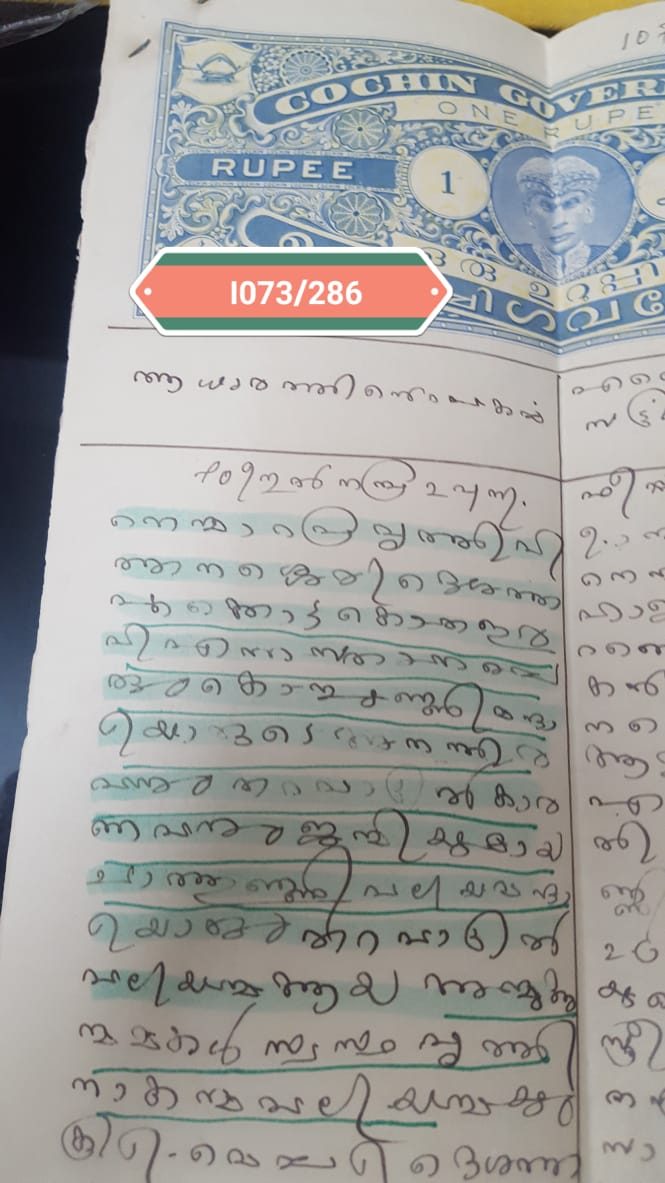
The history of this Tharavad (ancestral house) is known from the transaction deeds of each period — the documents known collectively as the granthavari (record books). From the details within them, we learn about the family.
The region was formerly known as Panoorpalli Palad Nedumpurayoor, ruled by an administrator titled Kotha Iravi of the Chera line. This rank-title points to the antiquity and prestige of the Tharavad. The earliest reference to it appears in the record O.S. 1073/296 (1898 CE).
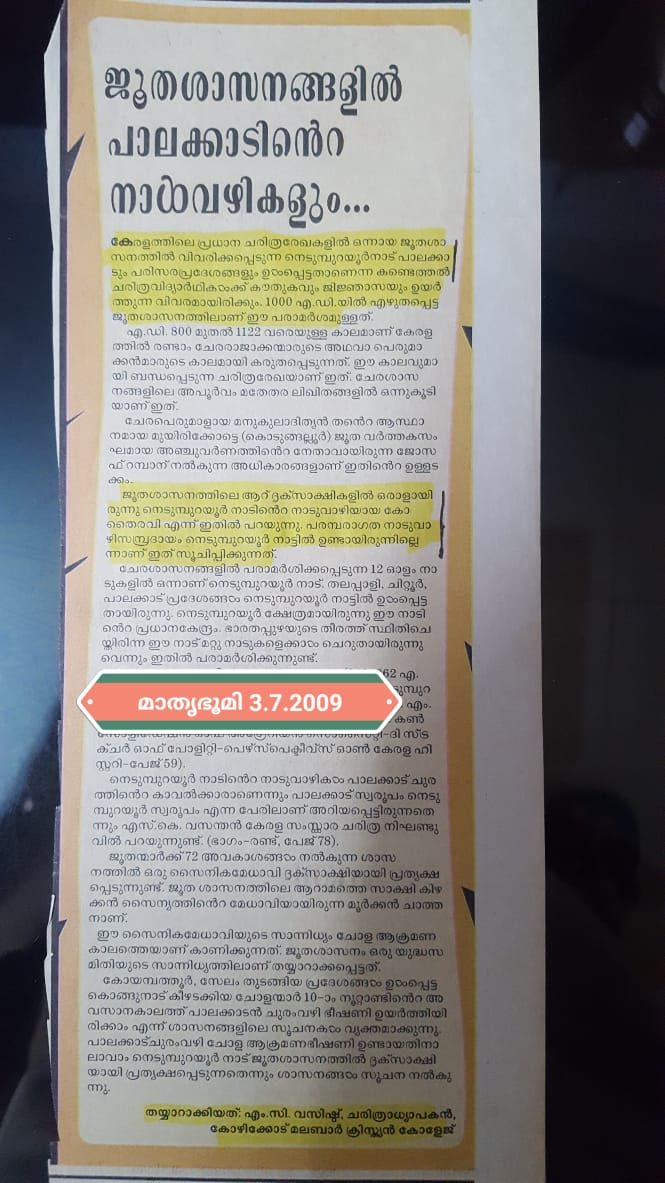
Source cited in the original: Mathrubhumi, 3 July 2009 — Dr. M.C. Vasishta.
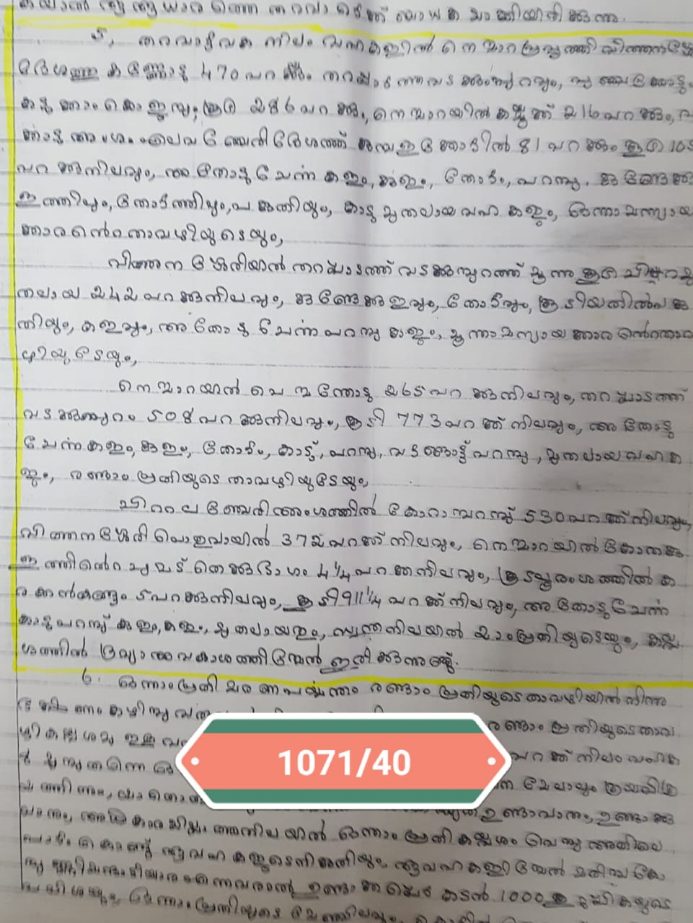
The partition deed of 1896 (O.S. 1071/40) lists the family's landholdings, measured in para, a traditional land-and-seed measure:
| Place | Holding |
|---|---|
| Nemmara Pravrithi, Vithanassery Desom, at Kannottil | 450 para |
| Tharattu (north and beyond) — Punchakkadu, Kadukkam & Kolambu together | 286 para |
| At Nemmara, Kaymmakku | 216 para |
| Vattakkadu portion, Elavanchery Desom, at Kulakkodu | 81 para |
| At Vithanassery — the Tharattu, three more plots & the Chira (tank) | 242 para |
| At Nemmara, Chemmantodu | 265 para |
| Vithanassery Tharattu and beyond | 508 para |
| Chittilancheri, Cheramangalam, Kiliyal, Koraan plot | 530 para |
| At Vithanassery, Pothuvayil | 372 para |
| At Nemmara, the foot of the Kotha Kulam (eastern side) | 4¼ para |
| Koodaloor portion, the Karnan plot | 5 para |
In all, about 290 acres of paddy land, valued at roughly 24,000 panam. Beyond the land listed above there were associated tanks, threshing-floors, gardens, plots and forest — a further ~65 acres.
Kaanam was the arrangement by which landlords (jenmis) kept their land from passing out of their control — the sum a tenant paid to the jenmi. The kaanaaran (tenant) advanced the jenmi a sum well below the true value of the land; each year the jenmi received the balance of produce after deducting interest. Kaanam was also known as michavaram, and the agreement was renewed every twelve years.
“From the common Tharavad: 2,000 para of paddy assured annually, with 500 para confirmed as fixed income; and in addition, at the twelve-year renewal, a right yielding around 10,000 panam extra.” — from the 1105/12 record
According to S. Rajendu in Nedunganaad Charitram (p. 466), the michavaram on a hundred para of land where money had been advanced was about twenty-five para. To draw two thousand para at that rate would require land on which about eight thousand panam had been advanced — roughly 100 acres. These holdings lay at Chanthippala, Edappadam, Navakkodu, Choozhiyamkulam, Konchakkol, Cholaya, Cherukulangara, Pola, and the Mappad fields, in Elloor and similar places.
Sources cited in the original: 1071/40, 1105/12, O.S. 1113/193 (Chittur Court), 1104/417 NSR, 1084/324 NSR.
Kudiyiruppu (or kudikettu) was the practice of tenants living and settling on the landlord's lands. The record 1113/174 notes that one branch alone had about a thousand tenant-settlements; together with the other branch, about two thousand in all — some 200 acres. These lay in the homesteads and various tharas (neighbourhood-quarters) near the farmland. The settlements, garden-plots, palmyra and tamarind all yielded separate income.
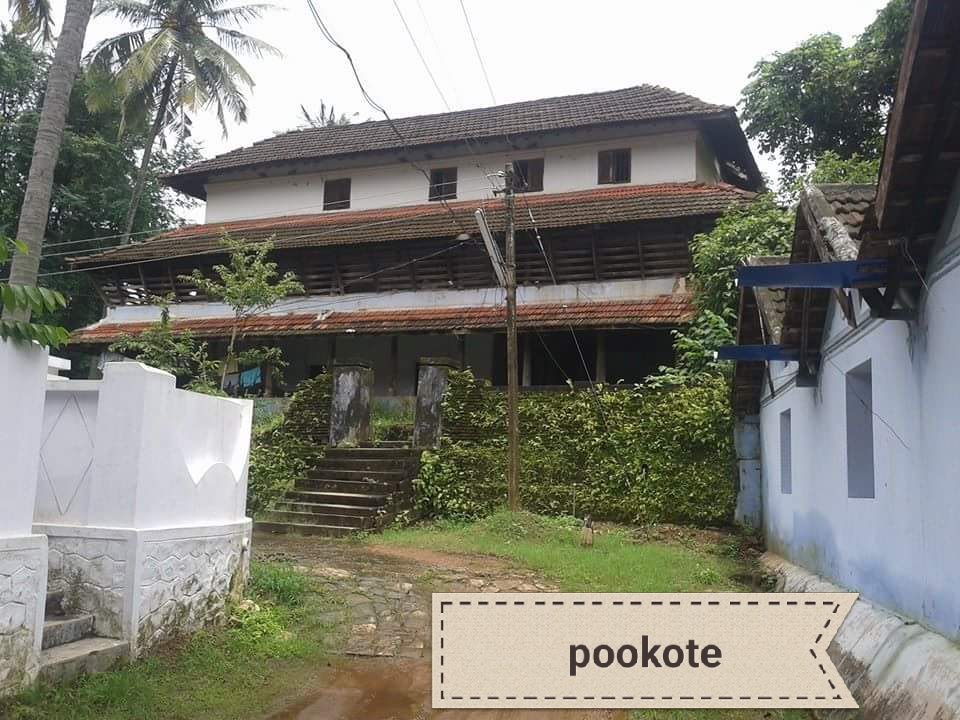
Besides the three-storey main naalukettu, there were a second kettu (the inner house, akathala), a small naalukettu in the Sarala Mandiram compound, a naalukettu at Chanthippala, a naalukettu in the Nemmara thara, and a small naalukettu at the Devi Nivasam compound — this last built around 1930 after the older single-storey structure was demolished.
A deed of 1034 (1859) records that the naalukettu houses of the Pookote compound were roofed with thatch (ola). To the west, on the compound, stood a row of gate-houses and outbuildings (padippura): the Anchumoorthi Alam shrine portion; the Padmanabhan-uncle's-house portion; the Manappaattu padippura; the Madhathil padippura (rebuilt in 1935); and others. The Manappaattu structure was tiled in 1887.
Sources cited: 1071/40, 1105/12, 1062/923 (Chittur Reg.), 1110/40 (NSR), 1102/2.
With the partition of the estate, the matrilineal branches took shape. In the senior thaayvazhi of Chonu-amma, the eldest member Nanu Madiar approached the Thrippeppuroor District Court in 1896 (O.S. 1071/40), seeking partition from the karnavar (family head) Kunji of the junior thaayvazhi. The partition was settled on the 11th of Karkidakam 1073.
Of the eleven categories of property, the first four — 1,053 para of land with the associated threshing-floor, tank, garden, plot, forest and so on — went to the thaayvazhi of Chonu-amma; 242 para with half the ponds and gardens went to the children of one daughter of Kunji-amma; items six and seven, 773 para, went to the other daughter's thaayvazhi of Kunji-amma; and items eight to eleven, 911¼ para, were held in joint possession. (Total: 1,684¼ para of land.)
Kunji-amma's daughter Cho had not married, so that branch would die out. By a settlement following the will of the karnavar Kannan Madiar, her property was divided equally between the members of the Chonu-amma branch and the grandchildren of Kannan Madiar. The disputes of branch-division were thus resolved. All who exist now and all who will come are, alike, members of the Pookote Tharavad.
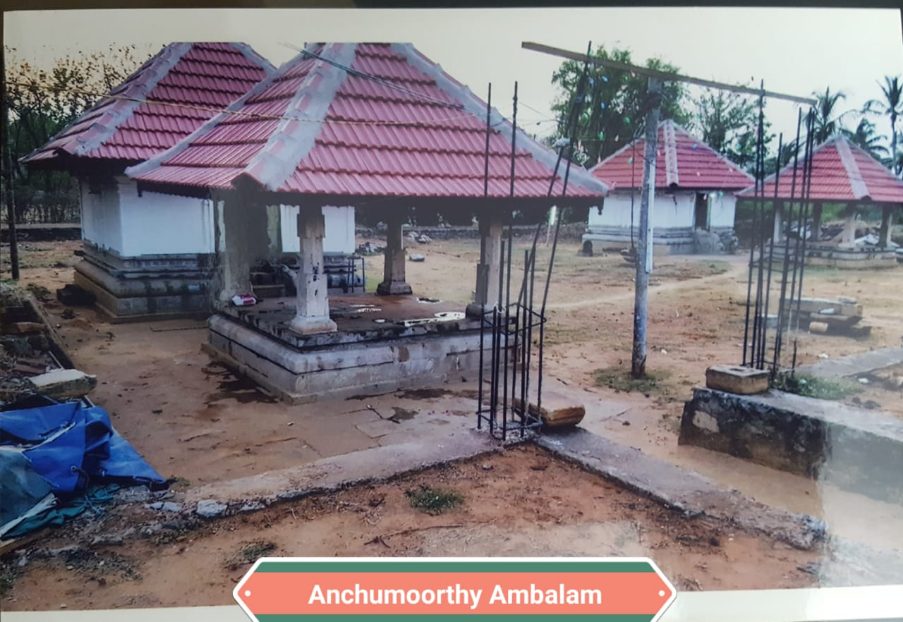
The following shrines were established and maintained by the Tharavad across generations (ooraan / proprietorship): the Vettakke Orumakan Kavu at Nemmara; the Nellikulangara Kavu at Vellangi; the Ayyappan Kavu at Vithanassery, Pookote thara; the Kavalassery Ayyappan Kavu at Kavalapuram; the Nagakanyaka Goshtam at Pookote thara; the Anchumoorthi Alam at Chanthippala; and the Sree Kurumbavu at Muyyal.
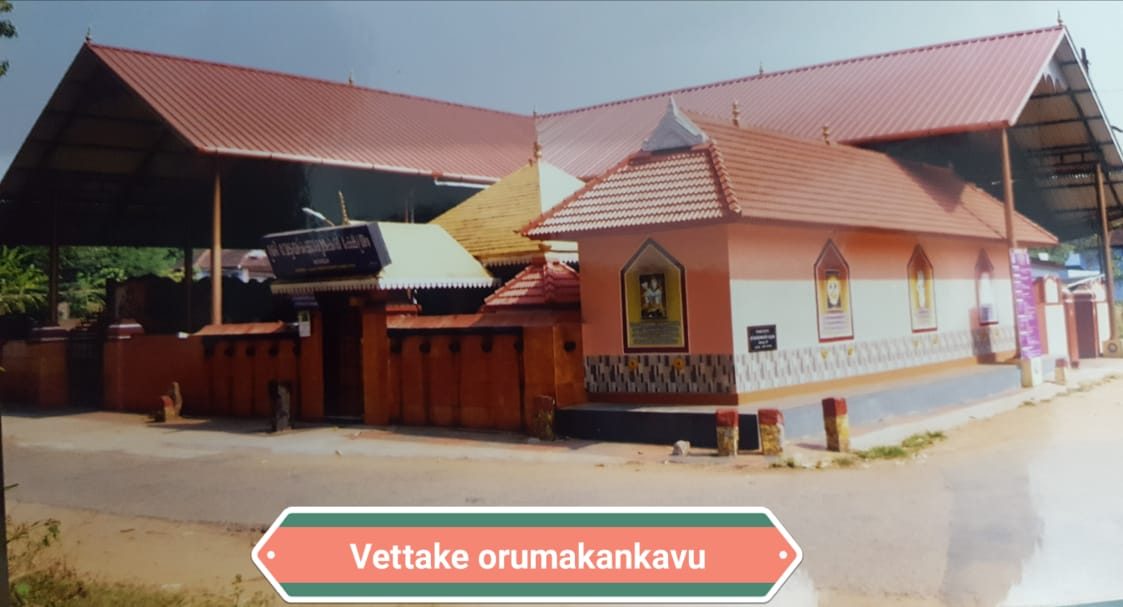
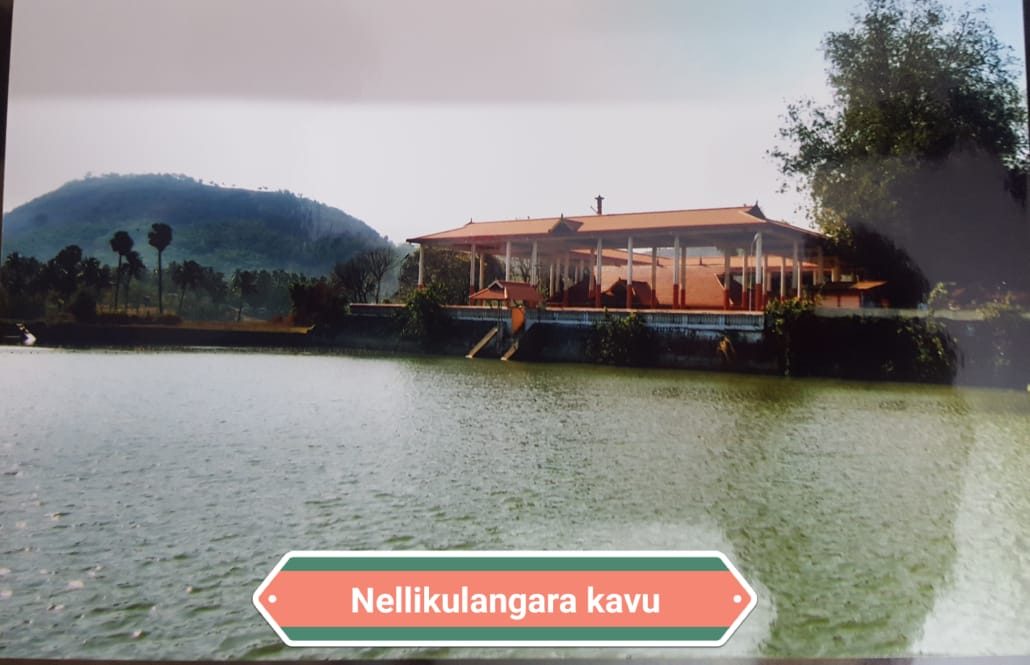
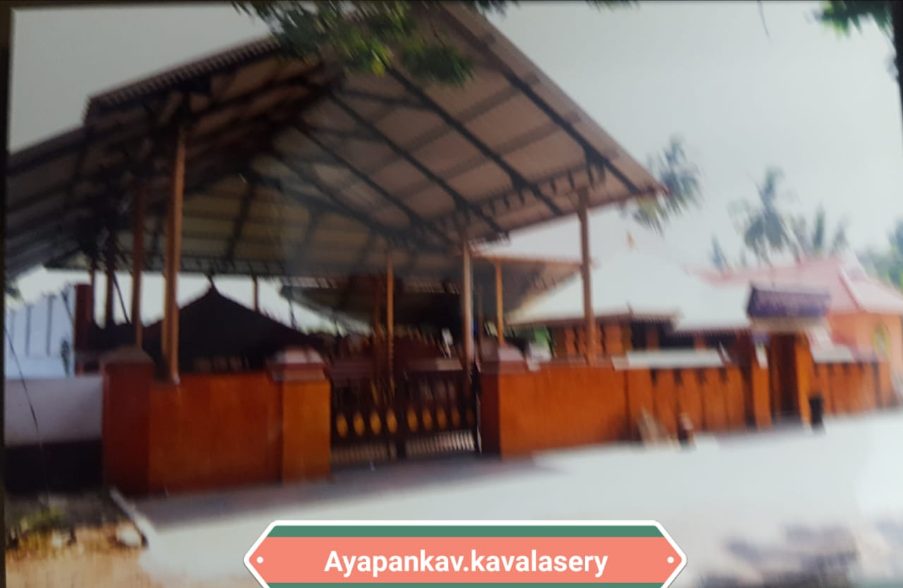
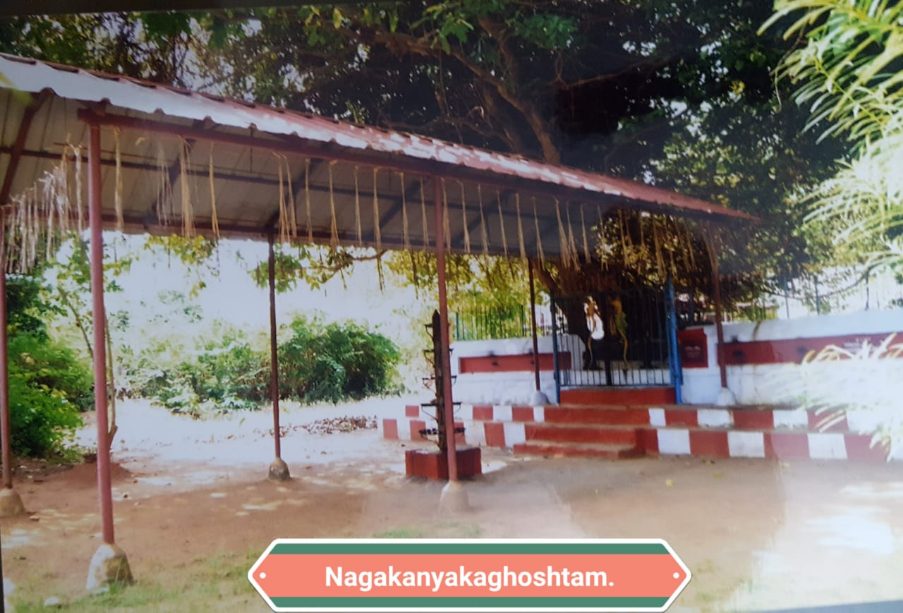
The Anchumoorthi Alam is the most ancient place of worship in this region. Having fallen into disrepair, it was rebuilt in the 1890s. The tank and well were restored, a padippura built, and a consecration (kalasam) performed. Beyond the timber taken from the Tharavad's own forests, about ten thousand panam was spent.
Source cited: 1071/260, Medam 17, NSR.
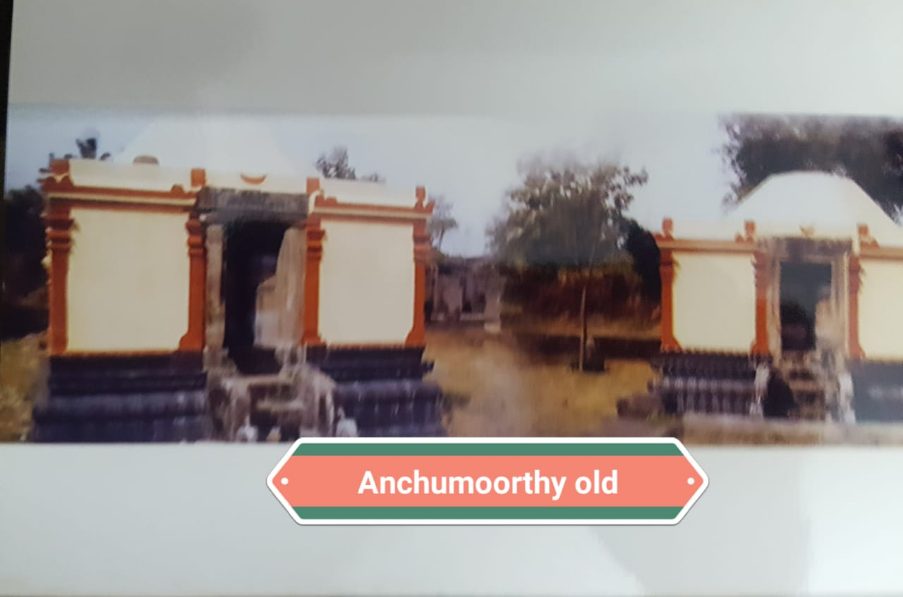
After the Kongan war these regions came under the king of Cochin. Dr. Gopalan Kutty of the University of Calicut records, in Kongan Pada, Onam, Thoppi (p. 35), that the Kongan army's attack on Chittur was probably in 1679 CE; the Tamil professor Dr. Chendamangalam Govind, in Pazhayoorinte Charithra Smruthikal (p. 80), holds it was 1676 CE. The Nellikulangara Kavu was handed over to the government during the reign of the Cochin king Sakthan Thampuran (1790–1805).
The partition deed specifies that, apart from the Anchumoorthi Alam, the expenses of the other shrines were met from the kaanam income, divided between the branches. It was the common karnavar's duty to collect the income, meet the expenses, and keep the accounts; any surplus or shortfall was shared equally. The recorded annual rituals — offerings of paddy and money to a long list of temples and observances, including the Navaratri observance and the Dhanu-month festival — ran to a grand total of about 859 para 9 idangazhi of paddy and 177 panam for temple expenses, with a further 400 para from each branch set aside for the Anchumoorthi Alam.
For various reasons the shrines could no longer be maintained, and the regular rituals lapsed from Kumbham 1103. Thereafter all the shrines except the one belonging to the Pookote thara were taken over by local committees. In recent times, with renewed enthusiasm for the bhajanas, the Tharavad members were brought together, a trust was formed, the rituals resumed, and reconstruction in the manner of a great temple is now underway — managed, since 2006, by the expanded Pookote Tharavad Devaswom Trust.
Apart from the rites of pennukettu kalyanam (the tying of the tali), kalam kodukkal, nagam-niram and mudiyan-niram, the other rites (adiyantharams) of each thaayvazhi were conducted at that branch's own expense. When a pennukettu kalyanam fell due, the two branches together set aside 1,700 panam equally. The last kettu kalyanam was held in 1907 (record 1085/55).
The pravrithi was the smallest administrative unit of the state, and local administration was carried out at its level. Most of the granthavaris open with the words “Nemmara Pravrithi.” Among the families that followed the marumakkathayam system, the Pookote Mannadiar line was the leading jenmi lineage of this region — connected, in ancient times, with the Chera-descended Mannadiars, the “min-Mannadiars” of the Konku country who were the Chera's minor chieftains. The administration of the Nemmara Pravrithi — which included the Vithanassery and Vellangi desoms — was therefore vested in the Pookote Mannadiars.
Source cited: Kerala Charitram, Vol. II, p. 165 — Dr. Raghava Variyar & Dr. Rajan Gurukkal.
It is from the Nemmara field that the Vela (festival procession) still sets out; tradition holds that this field belonged to Pookote. On the Vela day, before dawn, the sacred ornament (thiruvabaranam) kept in the Tharavad is received by the managing committee with drums and music, and is adorned on the Devi only in the presence of the Tharavad's representatives. Around midday, the ceremonial sword and shield — the emblem of the ruler's authority — are carried in procession from the Tharavad with elephant and music, and returned afterward to the Nemmara field. These customs still continue.
Source cited: Mathrubhumi, 16 March 2006.
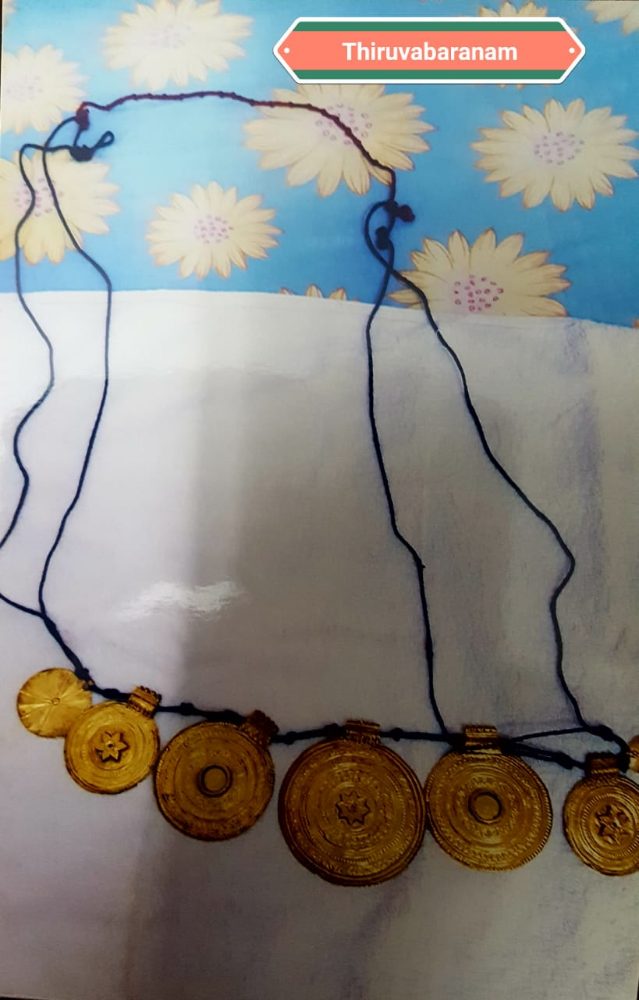
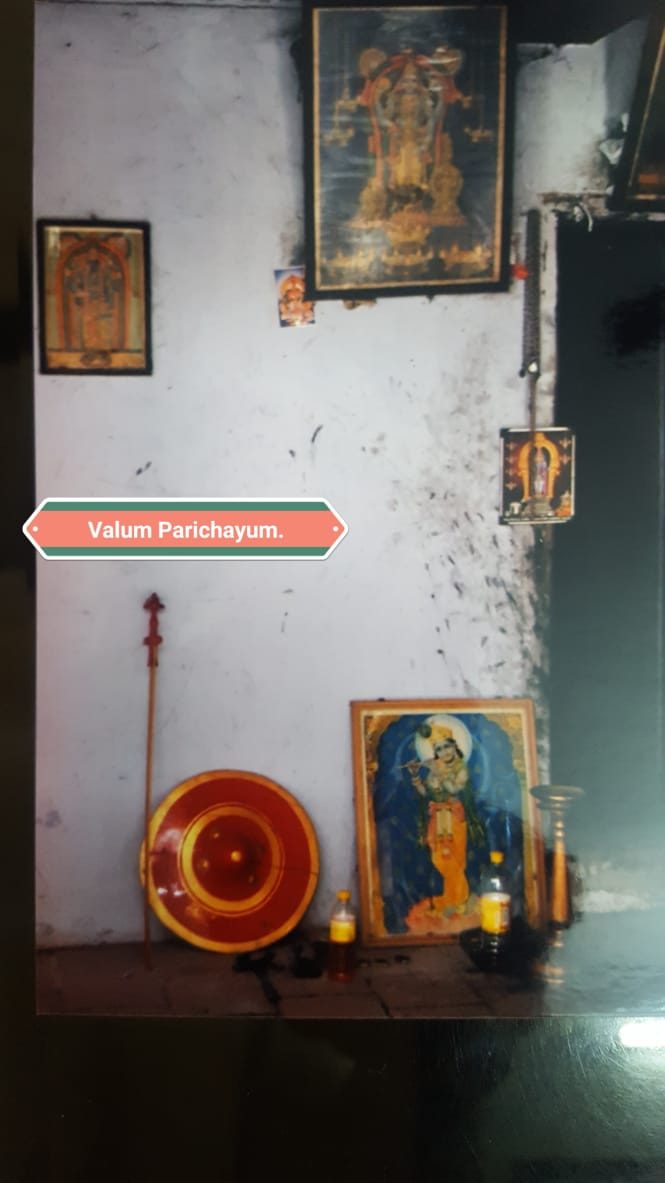
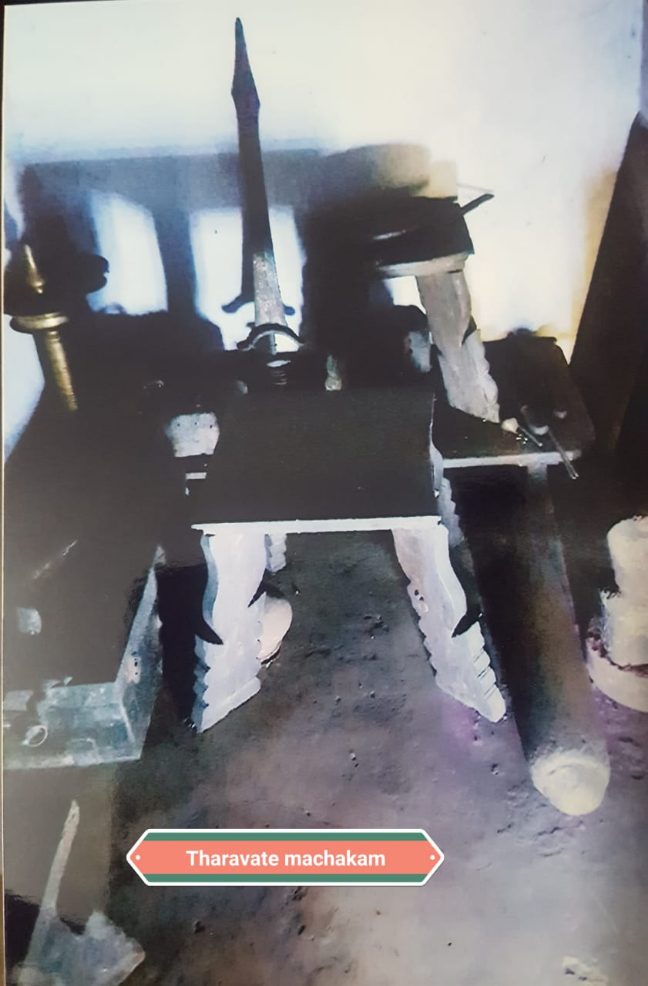
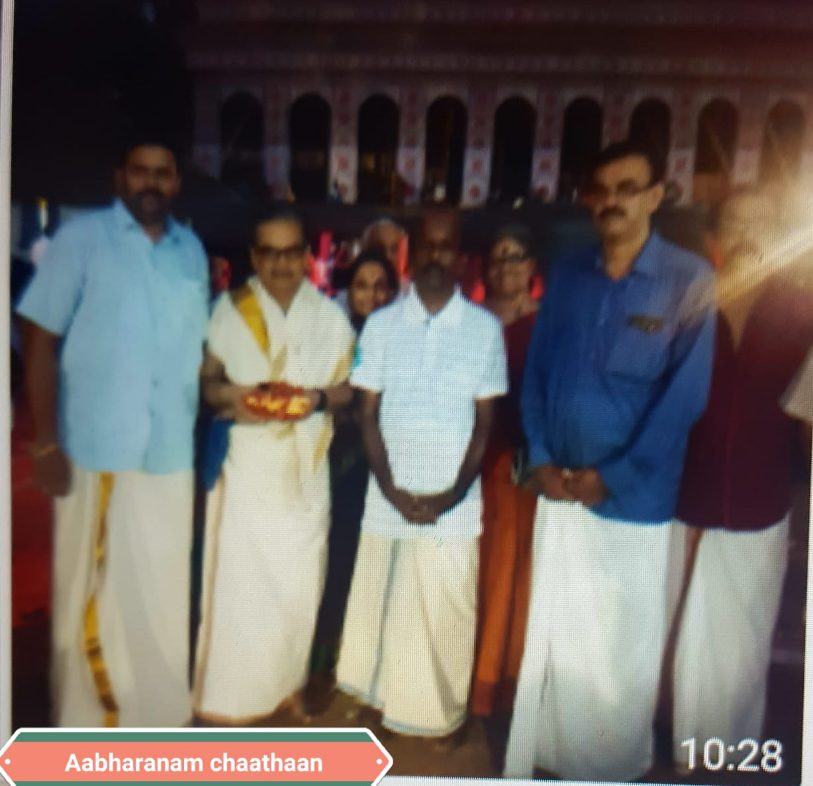
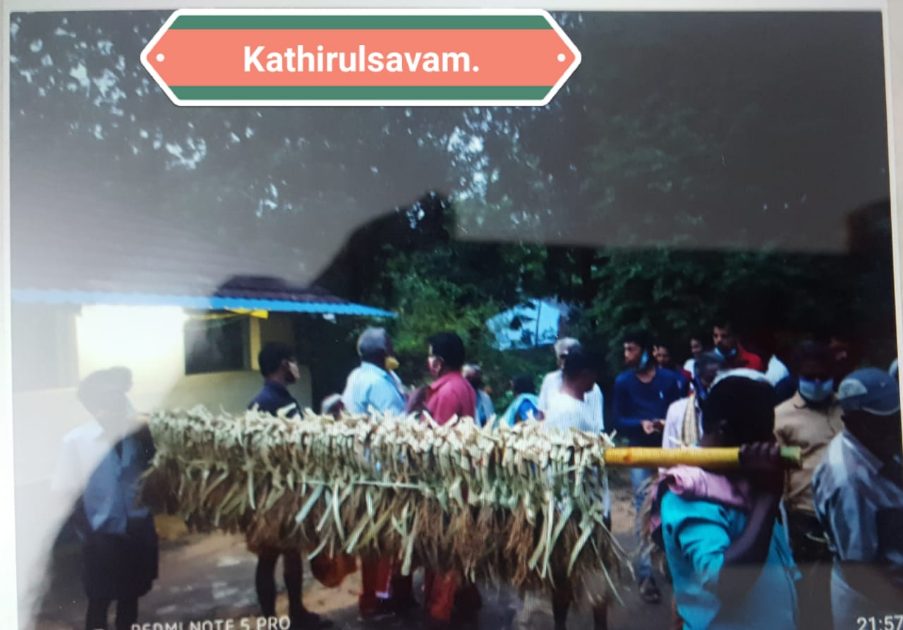
In the past, the places of worship were centres of authority. Most of the shrines of the Nemmara Pravrithi were established and run from the Tharavad — another sign that administrative authority over this region was vested in it.
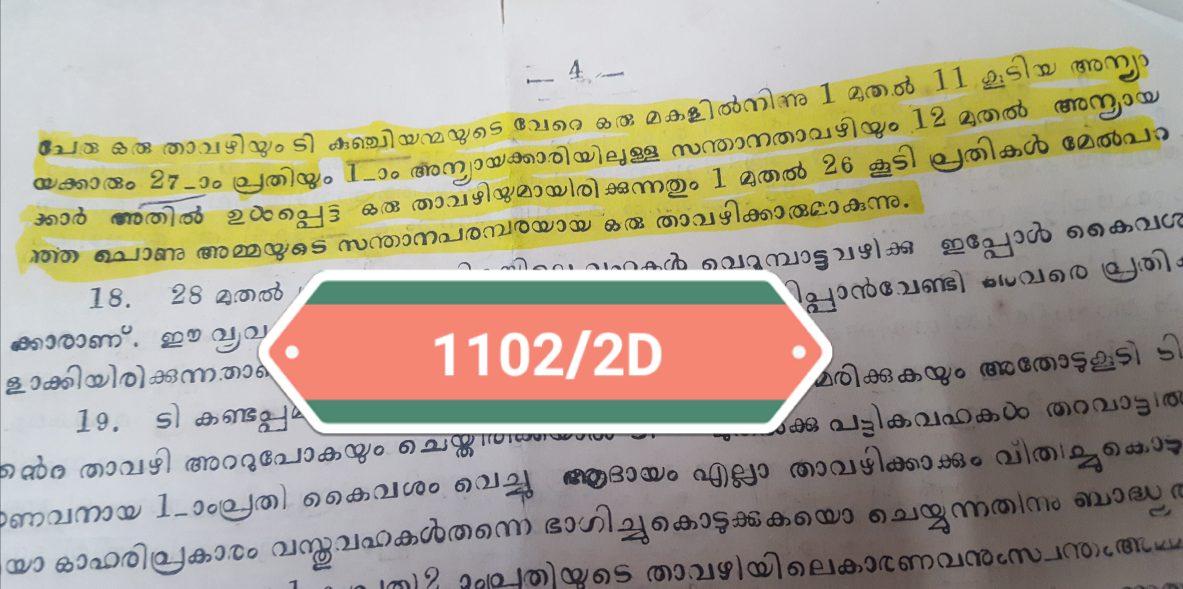
The family tree was begun by recording the older-generation members remembered by those now living, and was reconstructed from close study of the granthavaris and family records. No granthavari yielded anyone in the generations before Kannan Senior, Kuttisan, and Theettu Senior. The record 1102/2D states that in the Tharavad there were two women, Kunji-amma and Chonu-amma, from whom the branches descend. How many generations lie in between is not known; in this way the line was condensed to thirteen generations. As twelve generations span roughly 400 years, the Tharavad has an antiquity of at least about 430 years.
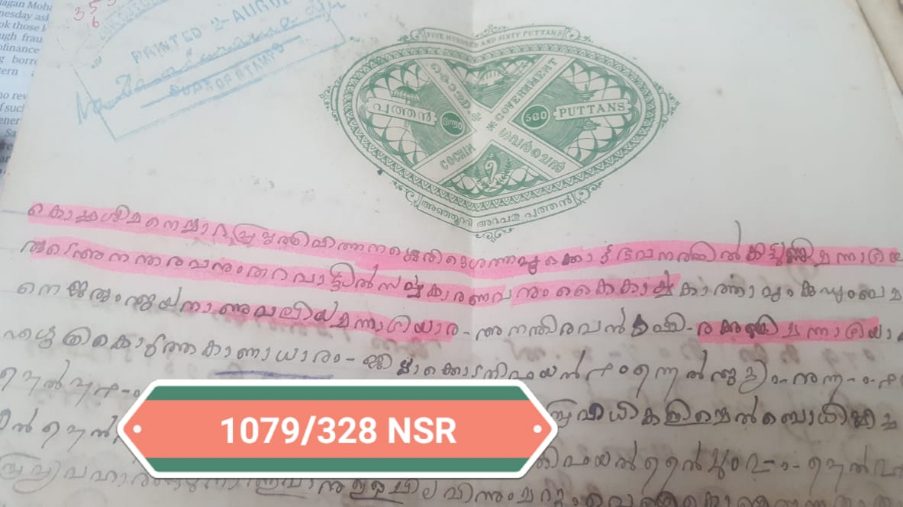
Sources cited: family records of various periods, palm-leaf documents, 1093/12, 1119/169, 1071/40, 1079/328, 1062/924 (Chittur D.R.), 1065/37 CDRO, 1102/18 (Chittur Court), and others.
The direct senior line of the Tharavad, mother to daughter:
The author's full charts — the master tree and the A- and B-branch descents. Tap any chart to view it full size; these are the authoritative spelling for all names.
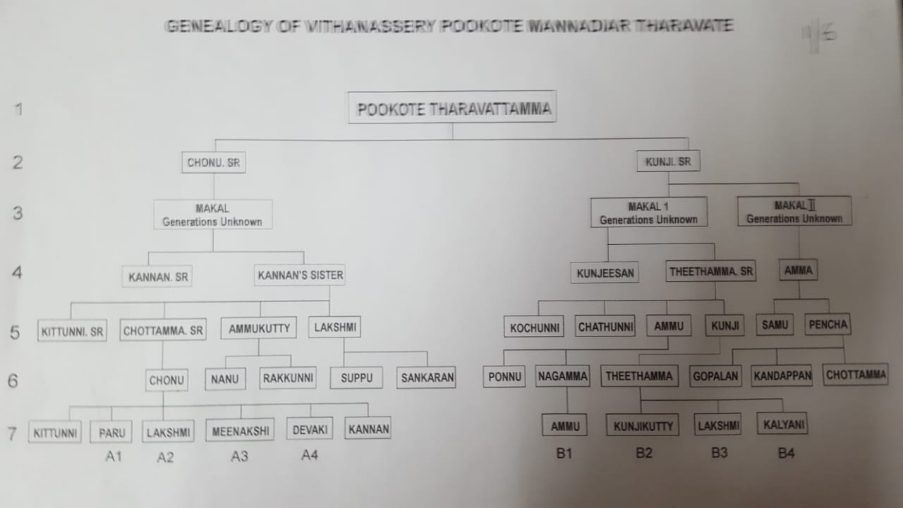
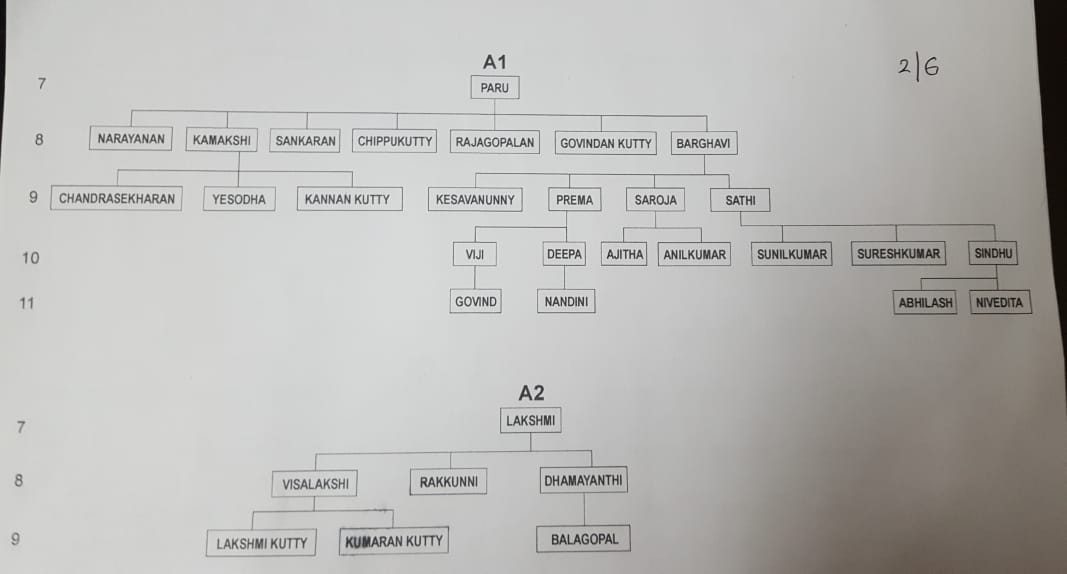
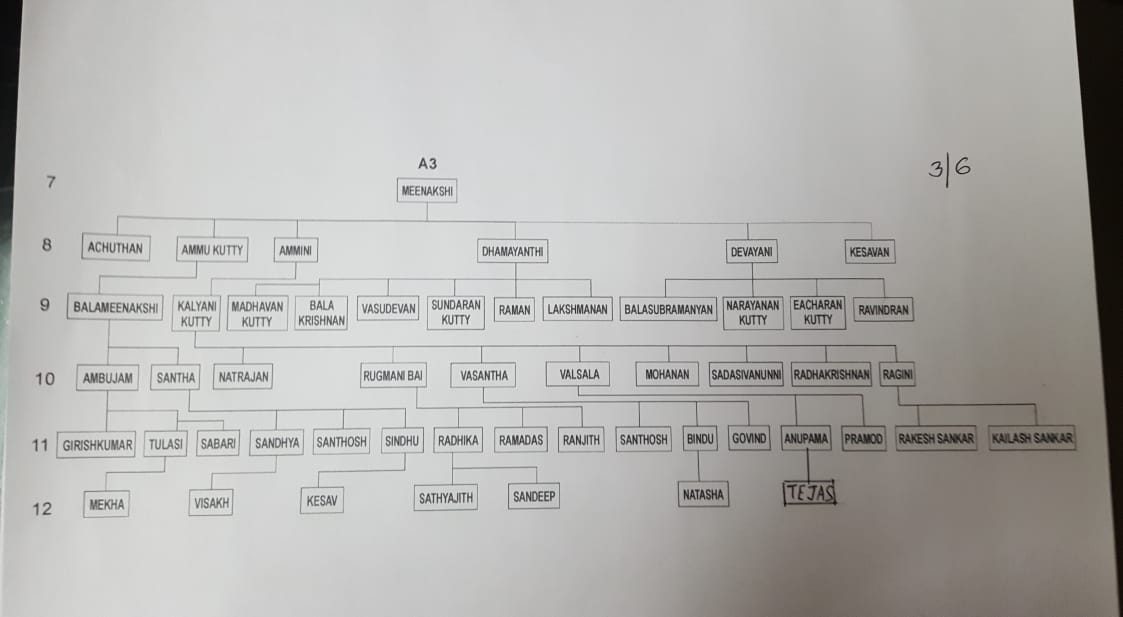
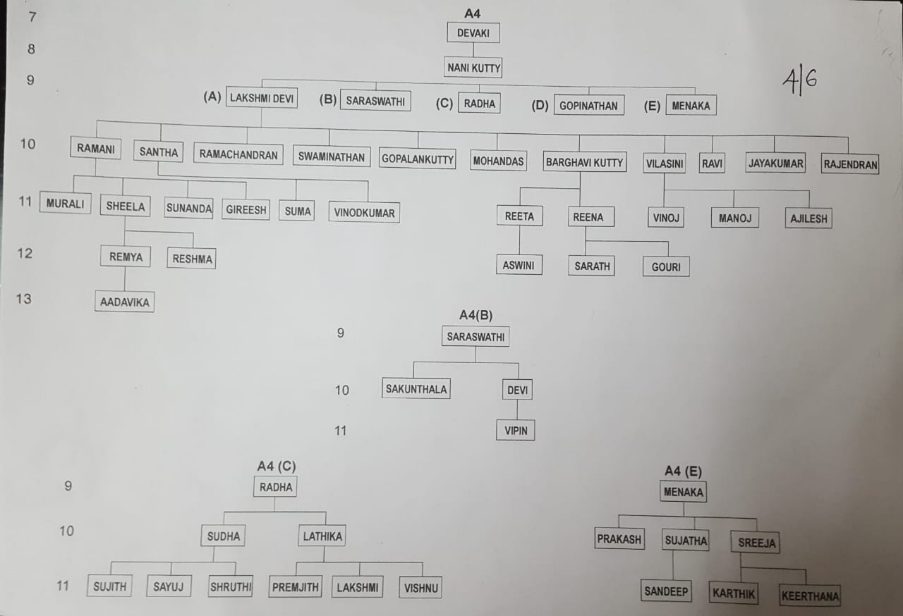
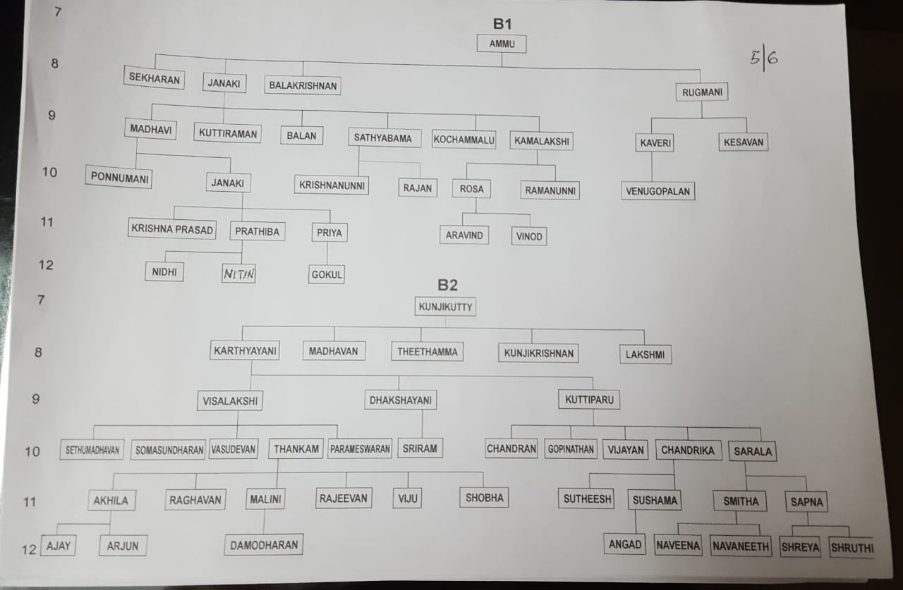
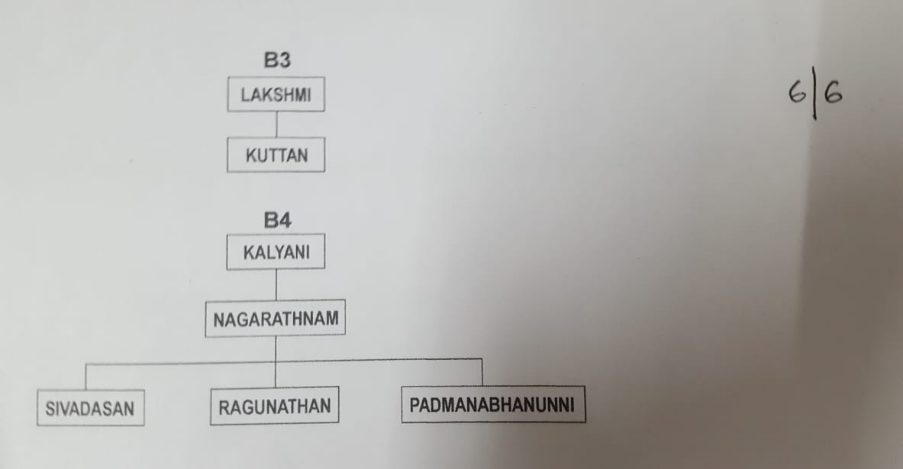
Up to seven generations, the family had a general (traditional) education. Kannan Madiar of the sixth generation was the first to sign in English (deed 1091/11 NSR, 1916), and from then on all the men of the family signed in English. From 1889 English education was available at the Royal Government's school at Nemmara, upgraded to a high school in 1916. The first to pass matriculation was Chippukutti Madiar of the eighth generation (b. 1908); among the women, Kuttiparu-amma of the eleventh generation (b. 1915).
A partial list of those who were, and are now, in various fields:
Also: national security (2), insurance (2), sales & finance (2), FMS Malaysia (3), and many farmers — though almost none now farm directly.
As the ancient administrators of the Nemmara Pravrithi, the Tharavad's contributions to the region were considerable. They cleared forested land and made it fit for cultivation, settled hardworking farmers and labourers and gave them homes, and organised the trades the desom needed. They built wells, tanks, eris (irrigation tanks) and koorni, helping develop this into a principal agricultural region — Vithanassery today is “the granary of the district.”
They established about seven shrines and maintained them for long, founded a school at Vithanassery, took the lead in establishing the cooperative bank and the reading-room, and set up an early private clinic at Vellangi. In general, the Tharavad gave much help in making this region fit for habitation.
Started a school at Vithanassery in 1926 and founded what became the farmers' cooperative society — today's bank — on the Tharavad's own land, serving as its founding president. The reading-room exists in his memory.
Earned the Licentiate in Indian Medicine (LIM) of Madras State; an early private medical practitioner at Vellangi, renowned in the treatment of children's illnesses.
Took a distinguished First with a Gold Medal in B.Sc. Physics (Hons.) at St. Joseph's College, Tiruchirappalli, and lectured there. Returning home, in 1943 he upgraded the Vellangi school into an upper-primary, in memory of his brother Chippukutti Madiar. Long the karnavar's agent, and later karnavar himself.
After leaving the MES, started a cycle-tyre factory at Palakkad — Vishwachakra Tyres — which later closed because of labour disputes.
A mridangam teacher, a disciple of Kunnisseri Mani Iyer, and the first guru of many of the district's noted musicians.
Noted in the original: this roll is not complete; profiles from the eighth generation onward remain to be added.
“My deepest, heartfelt gratitude to Ponnumani, who guarded and preserved like treasure the many old deeds — about three hundred — though much was in disarray, and handed them over to me. With that record of thanks, let this account conclude.” — Er. Pookote Natarajan · Vithanassery · 4 January 2021
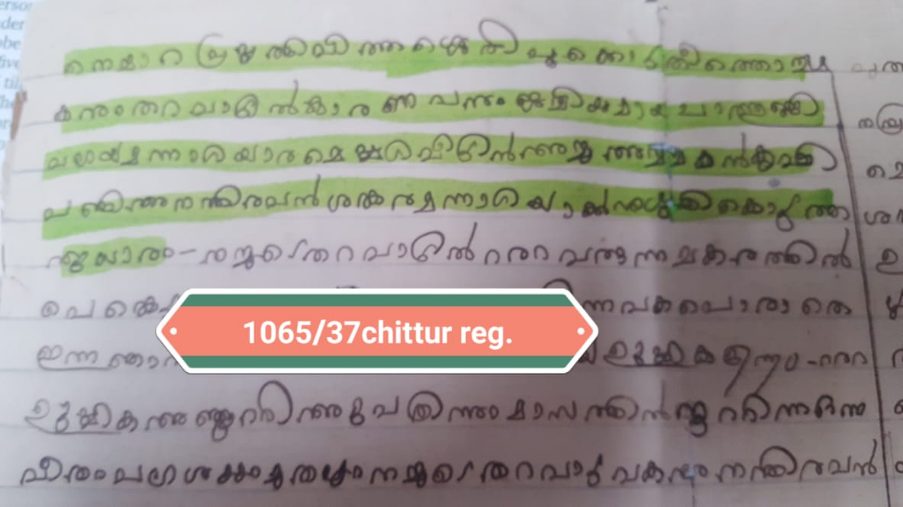
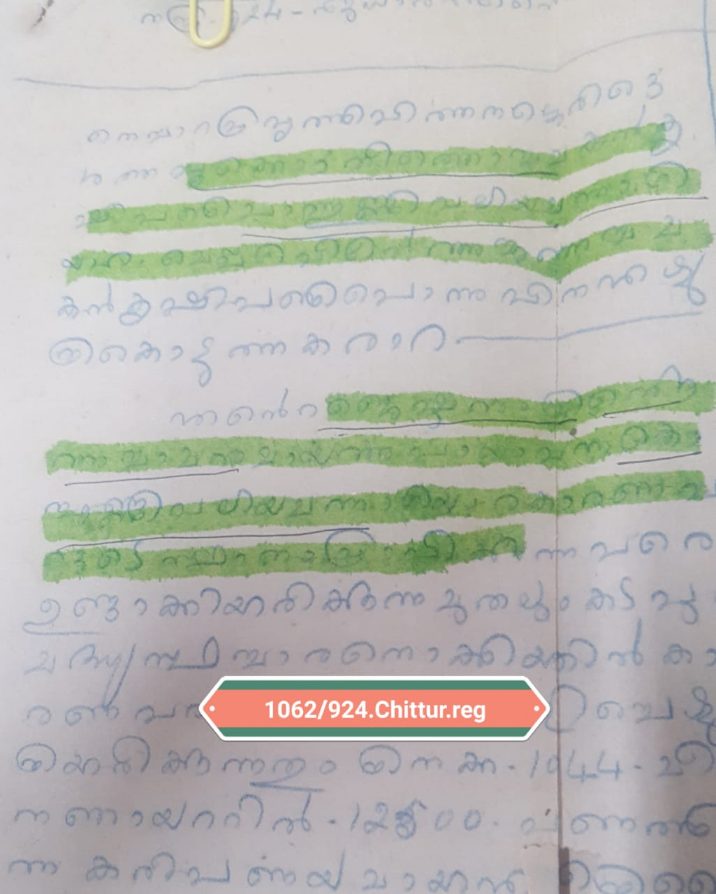
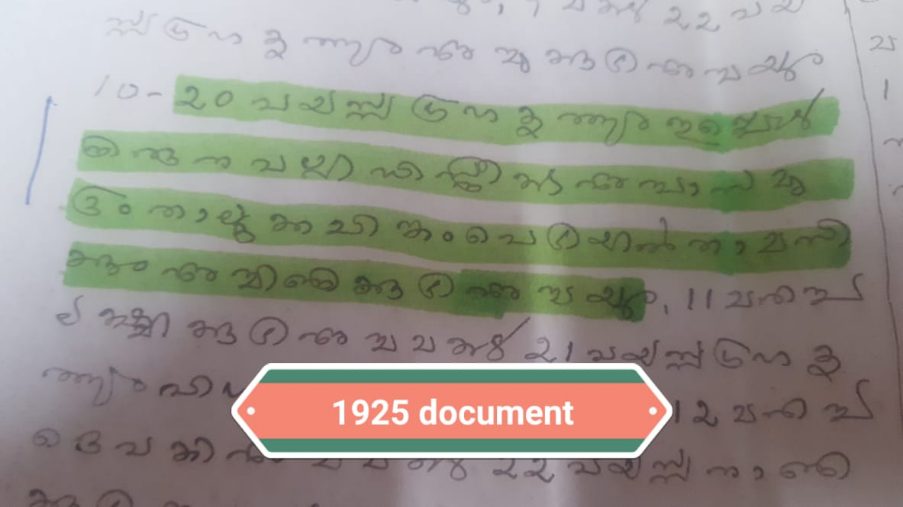
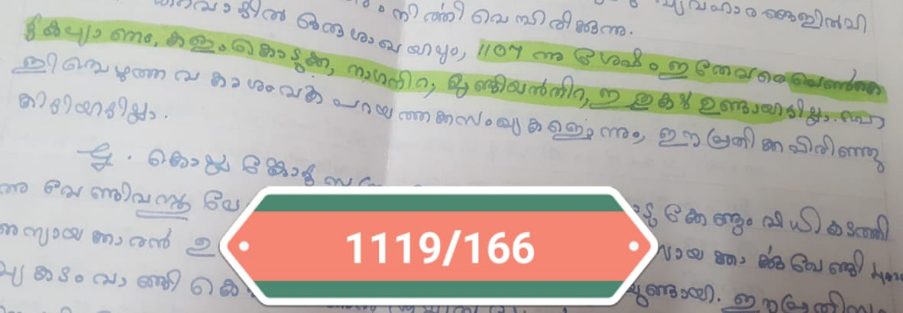
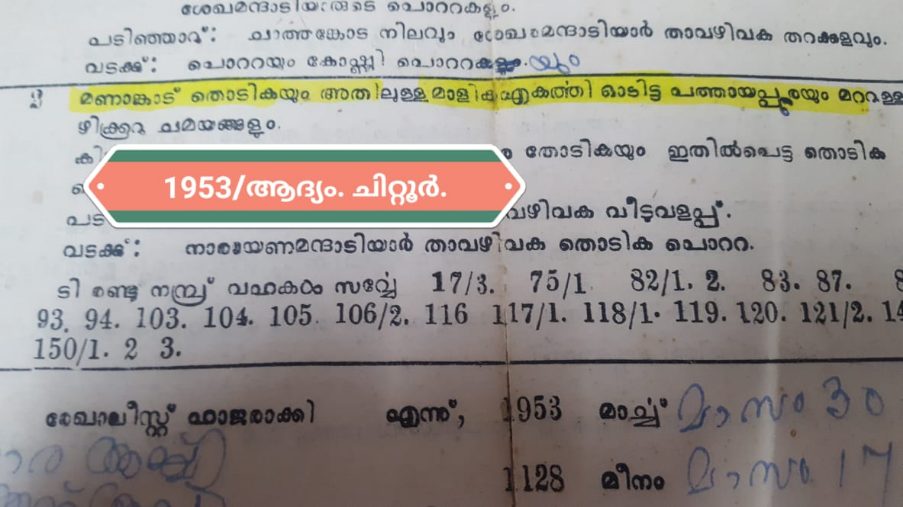
Photographs of the original handwritten deeds and record books (the granthavari) from which this history is drawn, each labelled with its register number, and a 2009 newspaper article on the family. Tap any image to view it full size.
📜 View or download the complete original document (PDF)